Why should we have an attitude of gratitude? Watch the video. Leave a comment.
An attitude of gratitude
Featured
Reply

Why should we have an attitude of gratitude? Watch the video. Leave a comment.

Hearing the news of Malcolm-Jamal Warner’s passing hit like a ton of bricks. It was totally out of left field—so unexpected and sudden. As a man of a certain age, I recognize that many of my peers are experiencing major life changes. More often than not, those changes involve the loss of a loved one or their own passing. We all know that at some point, we have to go. But whenever one of us does, it always feels too soon.
Malcolm-Jamal Warner’s death hits especially hard because of what he represented to young Black men around the world. We were introduced to him as Theo Huxtable—a clean-cut Black teen who came from a good home and lived a normal life. In the eighties, there were very few, if any, characters who resonated with Black boys in that way. He wasn’t painted by the brush of white society, and he wasn’t some sidekick. Theo was us. He got the pretty girls, had a cool best friend, and sometimes struggled in school. The mere existence of a character like Theo was revolutionary—and Malcolm embodied him in a way that was honorable and aspirational.
Malcolm carried that same dignity throughout his entire career. He consistently showed up on screen as a strong character—not a caricature. His impact was real and will endure for generations.
When one of us passes on, it always feels too sudden. But in my heart, I believe that when that moment comes, it’s God letting us know our assignment is complete—and He’s coming to take us home. I know I speak for millions of brothers when I say: thank you, Malcolm. Job well done.

BREAKING: ‘The Cosby Show’ Star Malcolm-Jamal Warner Dead at 54, TMZ Reports
Malcolm-Jamal Warner, the beloved actor who rose to fame as Theo Huxtable on the groundbreaking television series The Cosby Show, has died at age 54. TMZ was first to report the news of Warner’s unexpected death, which has since been confirmed by multiple outlets including People Magazine, Page Six, and Fox News.
According to TMZ, Warner died from an accidental drowning. As of this writing, no additional details have been released regarding the specific circumstances surrounding his death or where the incident took place. Representatives for the actor have not yet issued an official statement, but tributes are already pouring in from fans and industry colleagues devastated by the loss.
Warner, born on August 18, 1970, in Jersey City, New Jersey, became a household name at just 14 years old. Cast as the affable and often comically misguided Theo Huxtable, he starred alongside Bill Cosby in what would become one of the most influential sitcoms in television history. The Cosby Show ran for eight seasons from 1984 to 1992 and changed the landscape of primetime TV by centering a successful, loving Black family.
The role earned Warner critical acclaim and an Emmy nomination, cementing his status as a cultural icon. But Warner was never content to rest on early success. Over the next several decades, he built a rich and varied career, starring in the hit sitcom Malcolm & Eddie from 1996 to 2000 and later appearing in shows like Reed Between the Lines, Major Crimes, Suits, The Resident, and 9-1-1.
Warner also lent his voice to educational programming, most notably as “The Producer” on The Magic School Bus, a role that endeared him to a generation of young viewers. He was also a gifted director, working behind the camera on episodes of The Cosby Show, All That, Keenan & Kel, and Malcolm & Eddie.
Outside of television, Warner was a passionate musician and spoken word artist. In 2015, he won a Grammy Award for Best Traditional R&B Performance for his contribution to Robert Glasper’s cover of Stevie Wonder’s “Jesus Children of America.” He frequently blended his music with poetry and social commentary, performing with his band and appearing at events across the country.
In recent years, Warner hosted the Not All Hood podcast, where he explored topics around culture, community, and identity. A new episode of the podcast was released just three days before his death, underscoring the suddenness and shock of his passing.
Despite his public career, Warner kept his personal life intensely private. He is survived by his wife and daughter, whose names he never publicly disclosed. In interviews, he often spoke about fatherhood as one of his most important and grounding experiences.
Fans and fellow artists have taken to social media to express their grief and celebrate Warner’s legacy. Many have highlighted his contributions not just as an actor, but as a cultural force who brought nuance and humanity to the roles he played—especially during a time when Black characters were often underdeveloped or stereotyped on screen.
Malcolm-Jamal Warner’s death marks the end of an era. He was more than a child star—he was a multitalented artist who continued to evolve, inspire, and uplift. His voice, both literal and artistic, will be sorely missed.
This is a developing story. Additional details and official statements are expected in the coming hours.
Clipse’s “Chains & Whips” video is a powerful portrait of legacy, faith, and survival
By: Eddy “Precise” Lamarre
Clipse has released the official video for “Chains & Whips,” and it stands as a striking cinematic reflection on family, history, and the Black experience. Directed by Gabriel Moses, the video follows the emotional arc of a Black family as they navigate the generational weight of incarceration, citizenship, and spiritual reckoning. The visual storytelling is rich with symbolism—images of confinement are juxtaposed with scenes of spiritual gathering, showing how resilience is passed down like scripture.
Pusha T delivers his verses with sharp intensity, channeling themes of power, pride, and institutional betrayal. No Malice, more reflective, brings a grounded spiritual voice that deepens the emotional impact of the video. Together, their energy draws a clear connection between legacy and the pursuit of liberation. Kendrick Lamar’s appearance acts as the soul of the piece—his words dissecting faith, trauma, and generational pain with unflinching honesty.
From the courtroom to the church, and from the yard to the dinner table, the video uses everyday spaces to comment on systems that have long defined the Black American journey. “Chains & Whips” isn’t just a music video—it’s a visual sermon, a cultural reckoning, and a bold reminder of hip-hop’s power to tell deeper truths.
By: Eddy “Precise” Lamarre
Wu-Tang Clan’s Final Chamber Tour in Chicago: A Night of Legacy, Loyalty, and Loud Memories
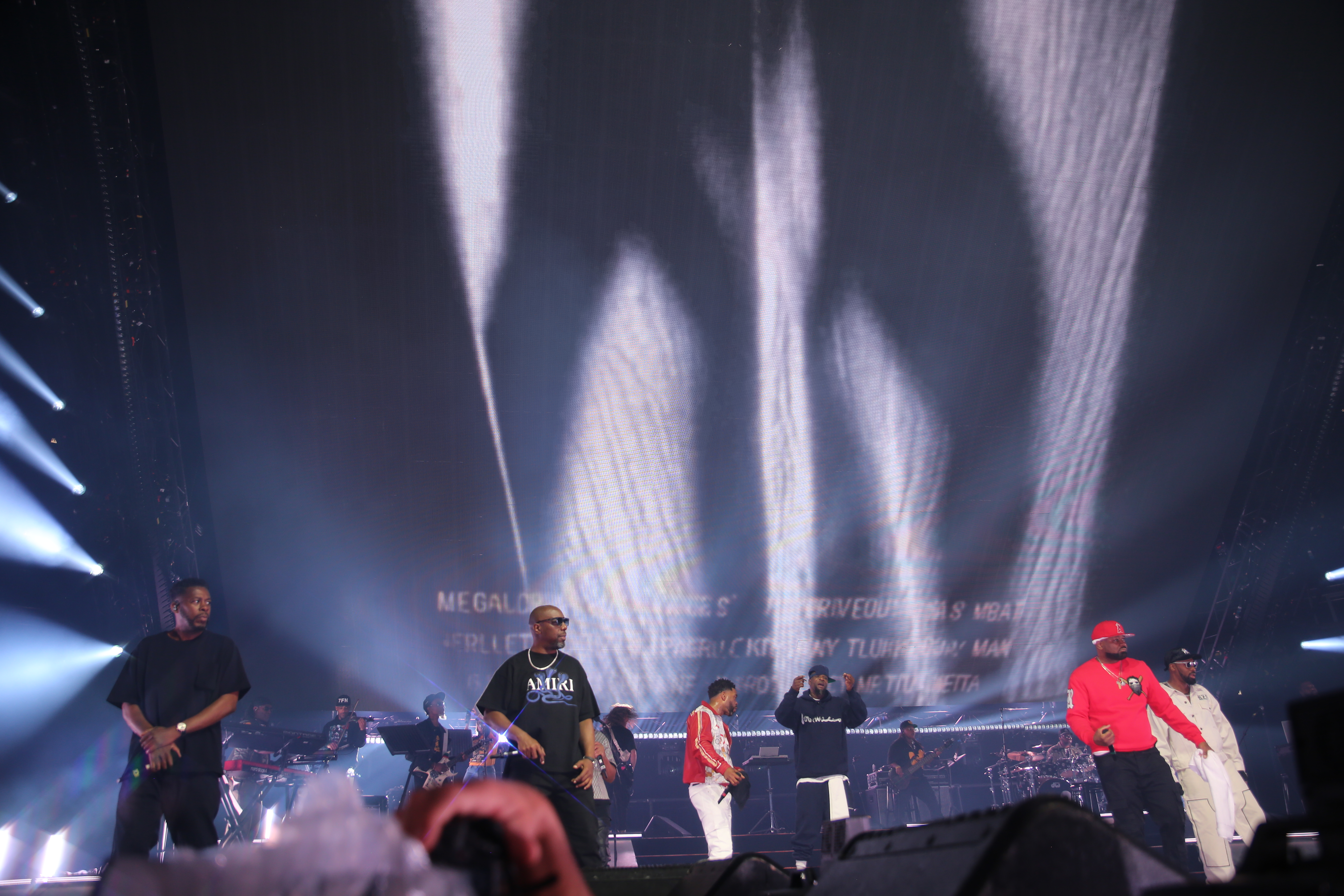
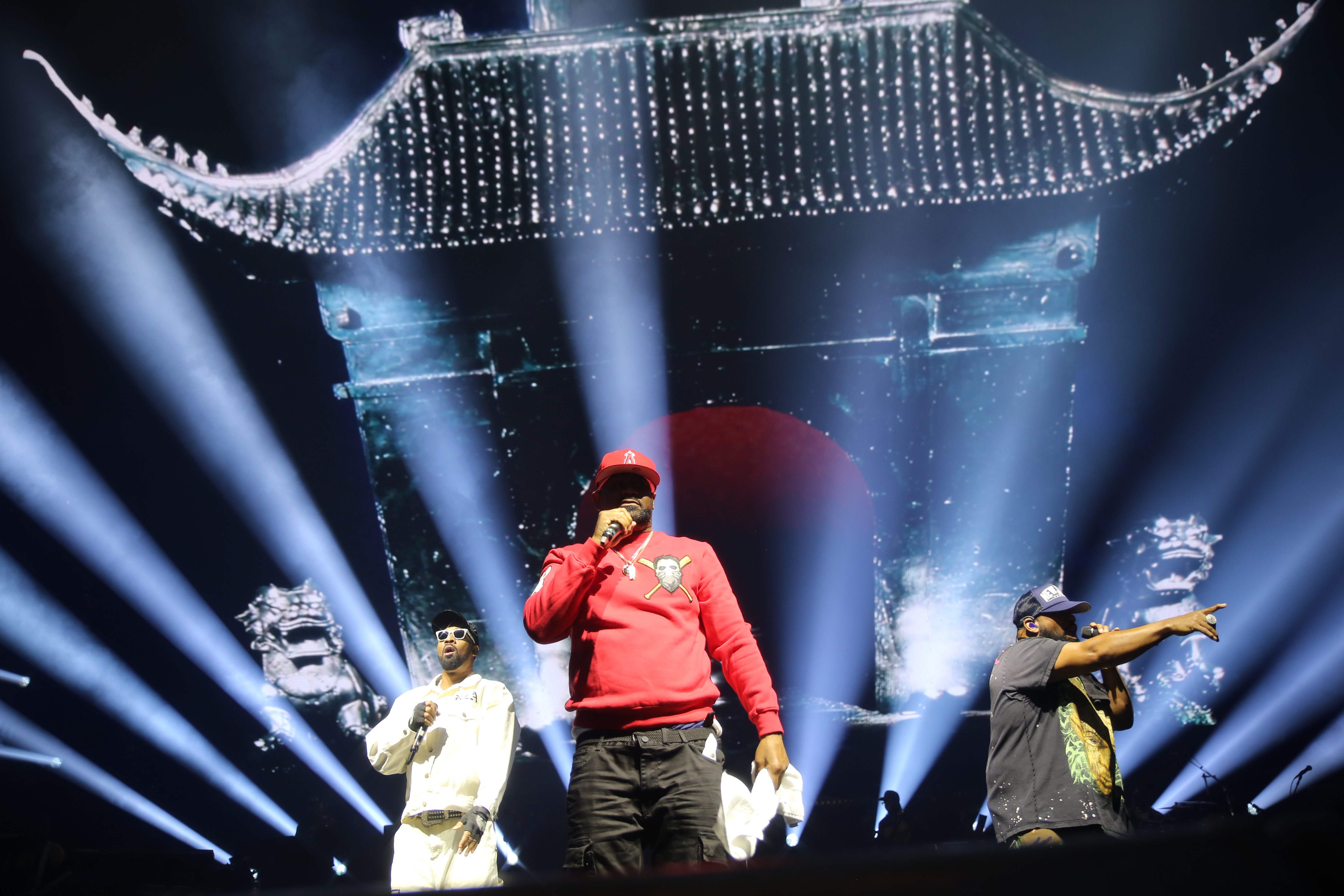
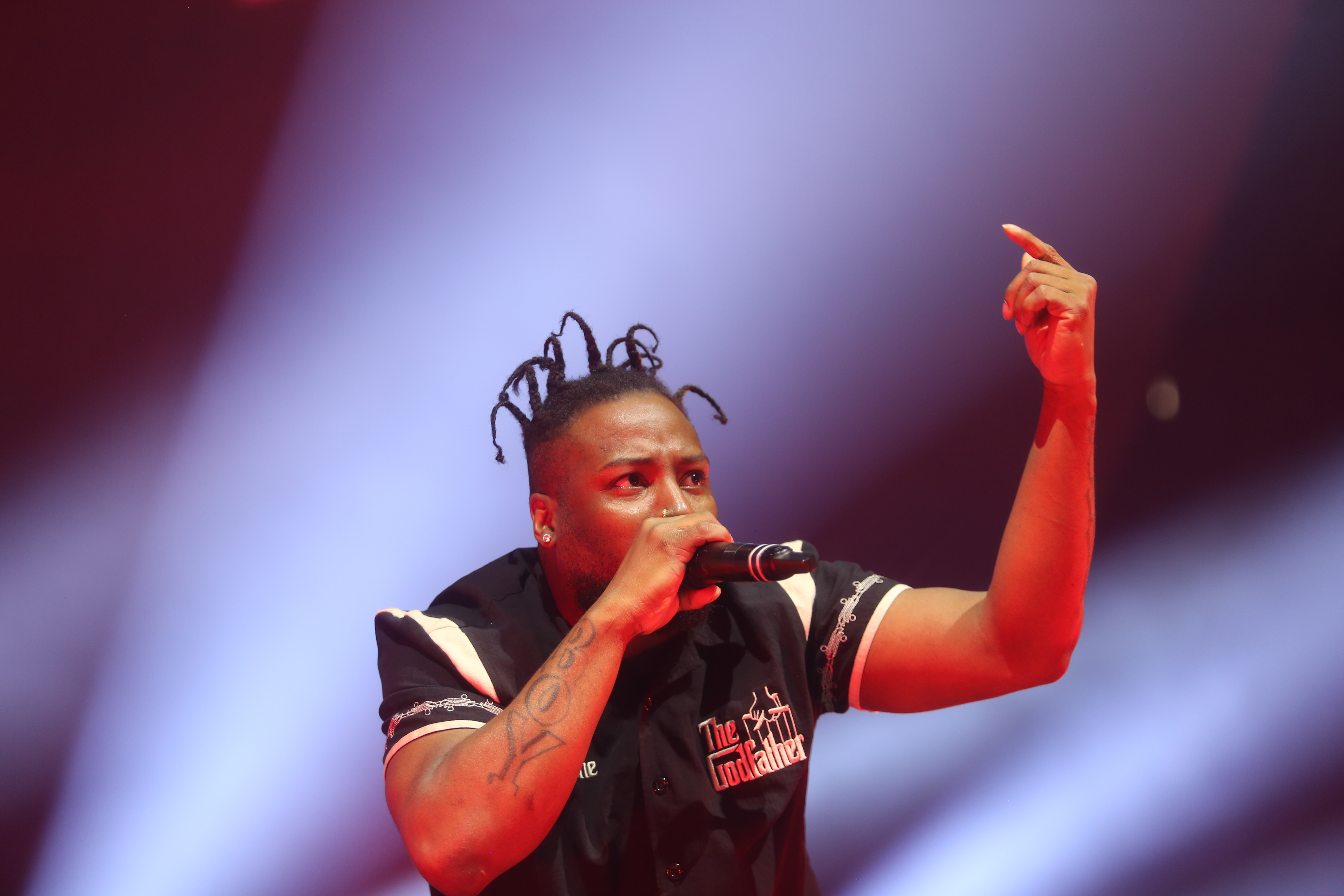
On July 7, Wu-Tang Clan brought their Final Chamber Tour to Chicago’s United Center. The crowd showed up early, ready for what would be one of the most anticipated shows of the summer. Run the Jewels opened with their signature high energy, setting the stage for what was about to come.
As soon as the first beat dropped, I was reminded of where it all started for me. Thirty years ago, I snuck into the House of Blues, just a kid looking to feel the weight of Wu-Tang Clan’s music live. That night, all nine original members stood on stage, and the entire room moved as one. Ol’ Dirty Bastard’s wild energy filled every corner of the venue. That moment shaped how I viewed hip-hop.
Now, decades later, I stood inside a packed arena. Things have changed. The men on stage have evolved. RZA has built a career as a film director and producer. Method Man is now an actor with an undeniable presence. GZA speaks on science and philosophy alongside top thinkers. Raekwon continues to celebrate his Only Built 4 Cuban Linx… legacy, and Ghostface Killah still sounds as sharp as ever. Even with everything they’ve accomplished outside of music, their connection to the crowd hasn’t faded.
The show opened with “Sunlight,” leading into “Bring Da Ruckus.” From the start, the energy was high. They followed up with “Clan in Da Front,” “Da Mystery of Chessboxin’,” and “Wu-Tang Clan Ain’t Nuthin’ to Fuck Wit.” The crowd responded to every line, shirts with the golden “W” filling every seat in the building.
Throughout the night, they shifted focus between group tracks and individual moments. Raekwon and Ghostface delivered “Criminology” and “Ice Cream” with ease, their chemistry as strong as ever. Masta Killa and Cappadonna kept the momentum going with their verses, while GZA’s performance of “Liquid Swords” and “Duel of the Iron Mic” showed his lyrical mastery.
Method Man brought undeniable energy. He performed “Method Man,” “Bring the Pain,” and “All I Need,” feeding off the crowd and commanding the stage like few can.
Young Dirty Bastard honored his father with high-energy performances of “Shimmy Shimmy Ya” and “Got Your Money.” His presence connected the past with the present, and the crowd responded with loud approval.
The night was built on classic after classic. Tracks like “Protect Ya Neck,” “Reunited,” “C.R.E.A.M.,” and “Triumph” had the entire building on their feet. When Inspectah Deck delivered his verse on “Triumph,” the reaction from the crowd was overwhelming.
Standing there, it struck me that I wasn’t that kid sneaking into shows anymore. Yet somehow, the feeling remained the same. I could see it on every face around me—Wu-Tang Clan still hits just as hard.
Here is the full setlist from the night:
“Sunlight”
“Bring Da Ruckus”
“Clan in Da Front”
“Da Mystery of Chessboxin’”
“Wu-Tang Clan Ain’t Nuthin’ to Fuck Wit”
“Method Man”
“Shame on a Nigga”
“Protect Ya Neck”
“Can It Be All So Simple”
“Holla”
“Criminology”
“’97 Mentality”
“Above the Clouds”
“Incarcerated Scarfaces”
“Ice Cream”
“Bring the Pain”
“All I Need”
“Liquid Swords”
“Duel of the Iron Mic”
“4th Chamber”
“Gravel Pit”
“No Said Date”
“Run”
“Tearz”
“Reunited”
“Shimmy Shimmy Ya”
“Got Your Money”
“C.R.E.A.M.”
“Triumph”
Thirty years later, Wu-Tang Clan remains one of the most powerful groups to take the stage. The names and venues may change, but their impact stays the same.



Drake’s “What Did I Miss?” Signals a Ruthless New Era
-Eddy “Precise” Lamarre
Drake has always been a master of the moment, shifting moods, alliances, and soundscapes with the ease of a veteran hitmaker. But with his new single, “What Did I Miss?”, the Toronto superstar is issuing a warning. The track, which premiered July 4 during a livestream event called Iceman: Episode 1, marks the beginning of what’s shaping up to be his coldest and most calculated era yet.
The single arrives as Drake introduces a new persona: Iceman. The name draws from two distinct inspirations. One is Kimi Räikkönen, the stoic Formula 1 driver known as “The Iceman” for his cool-headed demeanor and unflinching focus under pressure. Drake has shared photos of himself wearing Räikkönen’s signature helmet and has posted subtle references to his racing persona. The second inspiration comes from George Gervin, the NBA Hall of Famer celebrated for his effortless scoring and calm presence on the court. Both figures represent a type of composed dominance that Drake seems eager to embody during this next phase of his career.
The sound of “What Did I Miss?” reflects that same energy. From the opening notes, the production is cold and minimal, built on haunting melodies and a brooding bass line. DJ Lewis, Tay Keith, FnZ, and others provide the icy backdrop, giving Drake plenty of space to deliver some of his most direct and cutting lyrics in recent memory.
Throughout the track, Drake addresses friends and associates he feels turned their backs on him during his widely publicized feud with Kendrick Lamar. His words are sharp, but his delivery is calm and detached. One lyric in particular has already sent shockwaves across social media: “I saw bro went to Pop Out with them, but been dick riding gang since ‘Headlines’.” Without naming names, Drake takes aim at those who publicly aligned with his rivals while privately benefiting from their connection to him.
The rollout surrounding the single has been as calculated as the music itself. In the livestream event, Drake appeared in a massive Toronto warehouse surrounded by ice machines, weapons, and industrial imagery, creating a stark, cold atmosphere that reinforces the themes of the song. He was shown driving a truck branded with the Iceman logo through the empty streets of the city, further pushing the narrative of isolation and emotional detachment.
What makes “What Did I Miss?” stand out from the usual diss tracks is its restraint. Drake is not interested in loud declarations or frantic back-and-forth exchanges. Instead, the song plays like a controlled strike, precise and deliberate. It is less about scoring quick points and more about drawing a clear boundary between himself and those he now views as outsiders.
The single also sets the tone for what’s expected to be his next full-length album, tentatively titled Iceman, slated for release in 2025. If this first release is any indication, the album will likely lean into colder, more stripped-down production, with Drake embracing his new persona fully. The themes of distance, loyalty, and self-reliance are front and center, signaling a shift in both his music and his approach to fame.
With “What Did I Miss?”, Drake is repositioning himself. This is not the Drake who’s looking for sympathy or trying to appeal to everyone. This is the Iceman, a figure of control and detachment, here to let the music—and the cold—do the talking.

This week’s lineup brought serious heat across rap, R&B, and beyond. From standout lyricism and fiery mixtapes to bold visuals and emotional albums, these new drops are setting the pace for summer playlists everywhere. Here’s your full breakdown of the freshest releases from the past four days.
JID kicked off July 4 with GDLU: The Preluxe, a sharp, four-track teaser mixtape leading into his upcoming full-length album God Does Like Ugly. Known for his rapid-fire flow and intricate wordplay, JID doesn’t disappoint here. The project features Eminem, Lil Yachty, and 6LACK, pairing clever rhymes with slick production, making it a must-listen for hip-hop heads.
Listen to the full mixtape here:
JT shines in her latest solo release, “Ran Out,” a bold track packed with swagger, attitude, and confident bars. The music video matches the energy, showing off high-end visuals, fast cars, and no shortage of luxury. It’s an anthem for anyone who loves a flashy, unapologetic flex.
Watch the video here
DDG keeps the momentum going with “That’s My Ball,” an upbeat track accompanied by an animated visualizer. The fun, sports-inspired video features popular creators like Kai Cenat, Ludwig, ImDontai, and Valkyrae, adding an extra layer of entertainment to the playful, competitive song.
Watch the visualizer here:
DJ Snake and J Balvin link up once again for “Noventa,” an infectious reggaeton track filled with retro charm. The video takes it back to the ‘90s with VHS effects, throwback dance moves, and summery street party vibes, making it a certified warm-weather anthem.
Watch the video here:
Jessie Reyez delivers raw emotion on Paid in Memories, released July 2. Her powerful vocals and deeply personal songwriting take center stage as she explores themes of heartbreak, self-reflection, family, and healing. From stripped-down ballads to upbeat tracks, Reyez proves her versatility while staying true to her vulnerable sound.
Stream the full album here:
This week’s releases bring a range of vibes—from emotional R&B and fierce lyricism to flashy visuals and dance-ready beats. Jessie Reyez and JID deliver standout projects for listeners looking for depth and skill, while JT, DDG, DJ Snake, and J Balvin keep the energy high with vibrant visuals and catchy hooks.
No matter your mood, these releases deserve a spot in your playlist rotation.

Music Mogul Avoids Major Charges Yet Still Stares Down Consequence
After a blockbuster seven-week trial, Sean “Diddy” Combs was found not guilty of the most damaging allegations leveled against him. The federal jury rejected charges of racketeering conspiracy and sex trafficking, offering a sigh of relief for the hip-hop heavyweight and his legal team.
But Combs didn’t walk away free. The jury returned guilty verdicts on two federal counts of transporting women across state lines for prostitution under the Mann Act. While the conviction carries serious weight, the outcome was far lighter than what federal prosecutors had pushed for.
It’s a major legal and cultural moment. The empire didn’t collapse, but it cracked. And now the man once known for “Can’t Stop, Won’t Stop” must wait to see whether a judge agrees.
The Charges That Stuck
Prosecutors painted a vivid picture. They said Combs operated a criminal network hidden behind the glitz of his music empire, using drugs, violence and coercion to control young women. The term “freak-offs” became part of the courtroom vocabulary, used to describe sex parties allegedly orchestrated by Combs.
But the jury pushed back. They rejected the idea that Combs led a criminal enterprise or committed sex trafficking. The RICO charge didn’t land. The trafficking charge fell apart.
Instead, the jury focused on two specific incidents. Combs was convicted of transporting women for sex in two separate events involving singer Cassie Ventura and another unnamed woman referred to as “Jane.” The charges fall under the Mann Act, a century-old law originally designed to crack down on interstate sex exploitation.
It wasn’t the dramatic takedown prosecutors had promised, but it wasn’t an exoneration either. Two felony convictions remain on the board.
A Lighter, But Real Threat
Each conviction under the Mann Act carries a maximum sentence of 10 years in federal prison. Combs could, in theory, serve up to 20 years.
But here’s the reality: Combs has no prior criminal record, which could weigh heavily in his favor. His legal team is expected to push for minimal time, possibly even probation or a suspended sentence. Federal guidelines often allow room for leniency when a defendant lacks history of violence or previous convictions.
Sources close to the defense say they’re hopeful the judge will view the verdicts in that light. The jury clearly chose not to label Combs a kingpin or trafficker. That nuance could shift everything when it comes to sentencing.
Combs remains in custody for now at Brooklyn’s Metropolitan Detention Center. A sentencing date has yet to be scheduled.
The Fallout Is Still Heavy
Even without the headline-grabbing RICO conviction, the damage is real. Combs’s brand has been scorched. He resigned from Revolt TV, lost fashion and liquor partnerships, and watched decades of public goodwill evaporate almost overnight.
More than 50 civil lawsuits remain active, including multi-million-dollar suits from women who say Combs used power and fear to control them behind the scenes. Some of the cases echo the very details that didn’t stick in court. Others introduce new allegations.
Public opinion is split. Supporters see a man unfairly targeted. Critics say the guilty verdicts confirm what many feared for years. The leaked hotel video showing Combs striking Cassie Ventura in 2016, released mid-trial, hit hard across the cultural landscape. It wasn’t part of the charges, but its emotional impact was seismic.
The End of an Era?
This is not just a legal reckoning. It’s a cultural one. Sean Combs was once the blueprint for modern hip-hop moguldom—music, fashion, media, nightlife, and influence all rolled into one force of nature.
Now, he’s a convicted felon. That label won’t go away, even if the jail time does. His future in entertainment is uncertain. His standing in business is bruised. The gatekeepers he once partied with are no longer answering his calls.
Yet even now, Combs holds on to a sliver of the aura that defined his rise. His lawyers are poised to argue that the jury found him guilty of bad decisions, not criminal domination. That matters. Especially to a judge.
Sean Combs walked out of federal court with his legacy damaged but not destroyed. He escaped the most serious charges and may avoid substantial time in prison, thanks to the narrow scope of the verdict and his clean legal record. But this case has already altered the arc of his career and his cultural standing.
Whether Combs gets a second act remains unclear. What is clear is that even without the RICO conviction, the spotlight has shifted—and the story of Sean Combs has officially entered its most uncertain chapter yet.
By Eddy “Precise” Lamarre

Each January 1, as dawn breaks over Haiti, the aroma of simmering pumpkin soup wafts through neighborhoods, telling a story of resistance and triumph. Soup Joumou, once forbidden to enslaved people under French colonial rule, now serves as the centerpiece of Haiti’s Independence Day celebrations, marking 221 years since the nation became the world’s first Black republic.
This soup represents everything we fought for. Every spoonful carries the taste of freedom.

The golden-hued soup, rich with beef, vegetables, and Caribbean pumpkin, was once exclusively reserved for French plantation owners. After defeating Napoleon Bonaparte’s forces in 1804, Haitians claimed the dish as their own, transforming it from a symbol of oppression into one of liberation.
Today, the ritual of preparing and sharing Soup Joumou bridges generations. Families gather before sunrise to carefully craft the soup, following time-honored recipes passed down through centuries. The communal nature of the dish embodies Haiti’s national motto, “L’Union Fait La Force” — Unity Makes Us Stronger.
As Haiti navigates modern challenges, this New Year’s tradition remains unwavering, serving as both celebration and remembrance. Each bowl of Soup Joumou tells a story of resilience, carrying forward the legacy of a revolution that changed the world
By: Eddy “Precise” Lamarre
Doechii’s NPR Tiny Desk performance felt like an intimate revelation—a masterclass in artistry, lyrical prowess, and cultural homage. With an all-woman band backing her, she delivered a performance that transcended genres, leaning into the influences of jazz, bebop, and R&B while keeping hip-hop at its core. Opening with tracks from Alligator Bites Never Heal, including “Boom Bap” and “Denial is a River,” Doechii set the stage for a journey through rhythm, resilience, and raw emotion.

The band’s braids swayed in unison, a nod to Black girl beauty aesthetics, embodying the essence of sisterhood and pride. Their original arrangements elevated the performance, adding depth and dimension to Doechii’s intricate lyricism and vibrant delivery. A rapper’s rapper, Doechii’s ability to switch seamlessly between hard-edged verses and her angelic singing voice showcased her versatility and mastery of her craft.
Her rendition of “Black Girl Memoir” from All the Places You Go stood out as the emotional centerpiece of the set. The soul-stirring ballad, written years ago but made hauntingly relevant by today’s political climate, was a reflection on her experiences as a dark-skinned Black woman. The dedication added an emotional weight that left viewers captivated and reflective.
Doechii’s presence is a testament to Top Dawg Entertainment’s legacy of nurturing unparalleled talent. In the past decade, TDE has consistently offered music that shapes and defines culture, and Doechii is no exception. She isn’t just a rapper; she’s a messenger, weaving themes of love, joy, fun, and inspiration into her work.
With performances like this, hip-hop culture and rap music are undoubtedly in good hands. Doechii’s star is rising, and her light is undeniable.
By: Eddy “Precise” Lamarre

2024 is undoubtedly the year of the rap OG, returning the genre to its essence. At the year’s start, Killer Mike swept the rap category, winning Best Rap Album, Best Rap Song and Best Rap Performance. That accomplishment opened a portal to rap’s golden age. In a time dominated by auto-tune and vibes, younger artists like Travis Scott, Future and Lil Yachty have stamped their distinct styles onto the genre, helping redefine global perceptions of hip-hop culture. The storytelling and lyricism that defined rap in the ’90s seemed lost to history.
2024 has brought a resurgence of what many call “real rap,” and many of rap’s elder statesmen are drawing a line in the sand, reminding the world of their capabilities. Artists who have lived and grown with the genre have delivered projects showcasing their experience and skills. Killer Mike’s “Michael” set the stage, while Masta Ace and DJ Marco Polo followed with “Richmond Hill.” Common and Pete Rock released “The Auditorium Vol. 1,” earning Grammy nominations for Rap Song of the Year and Rap Album of the Year. LL Cool J teamed with Q-Tip for “The Force,” proving hip-hop legends can still innovate.
Other notable releases include Rakim’s “G.O.D’s Network (REB7RTH),” Ghostface Killah’s “Set the Tone (Guns & Roses)” and Ice Cube’s “Man Down.” These projects represent offerings from legends who have spent decades perfecting their craft.
Age and the Evolution of Hip-Hop
This OG takeover has inspired others from the same generation to continue following their dreams and creating new projects. All of this has sparked online debates about whether anyone should be rapping well into their 40s and 50s. Some argue older rappers should step aside and become mentors. Others see no reason for rappers to “age out” of creating their art.
Imagine if the Rolling Stones felt they aged out of rock ‘n’ roll. Rock legends perform and record well into their 70s and are celebrated. Why should rap be different? “Our storytelling gets better with age,” LL Cool J said. Storytelling has always been rap’s core. Who better to reflect on life’s challenges than those who have lived it? Styles have changed, new styles emerged and there’s always space for styles that were popular 20 or 30 years ago.
Hip-hop at 50 points to the culture’s endurance and relevance. Creativity has no expiration date. As Killer Mike said, “I’m going to do this until I physically can’t do it anymore. What you’re hearing now is the perspective of a 48-year-old Black man who has lived enough life to actually have something to say.”
Follow your dream, create your art no matter how old you are. What you have to offer matters, and the world is better for it. Whether you’re a 20-year-old newcomer or a 50-year-old veteran, your voice is valid. Hip-hop, like life, is an ever-evolving journey. These seasoned artists aren’t just making music; they’re showing us how to grow, adapt and stay true to ourselves.
Notable 2024 Releases:
2024 is proving to be a pivotal year for hip-hop, reminding us that age isn’t a limitation but a superpower. These artists are living proof that rapping at 50 is not only possible but essential to the culture they helped build.
 Precise