Sean “Diddy” Combs Walks on RICO, But Faces Federal Convictions

Sean “Diddy” Combs (Photo credit: Eddy “Precise” Lamarre)


Music Mogul Avoids Major Charges Yet Still Stares Down Consequence

After a blockbuster seven-week trial, Sean “Diddy” Combs was found not guilty of the most damaging allegations leveled against him. The federal jury rejected charges of racketeering conspiracy and sex trafficking, offering a sigh of relief for the hip-hop heavyweight and his legal team.

But Combs didn’t walk away free. The jury returned guilty verdicts on two federal counts of transporting women across state lines for prostitution under the Mann Act. While the conviction carries serious weight, the outcome was far lighter than what federal prosecutors had pushed for.

It’s a major legal and cultural moment. The empire didn’t collapse, but it cracked. And now the man once known for “Can’t Stop, Won’t Stop” must wait to see whether a judge agrees.

The Charges That Stuck

Prosecutors painted a vivid picture. They said Combs operated a criminal network hidden behind the glitz of his music empire, using drugs, violence and coercion to control young women. The term “freak-offs” became part of the courtroom vocabulary, used to describe sex parties allegedly orchestrated by Combs.

But the jury pushed back. They rejected the idea that Combs led a criminal enterprise or committed sex trafficking. The RICO charge didn’t land. The trafficking charge fell apart.

Instead, the jury focused on two specific incidents. Combs was convicted of transporting women for sex in two separate events involving singer Cassie Ventura and another unnamed woman referred to as “Jane.” The charges fall under the Mann Act, a century-old law originally designed to crack down on interstate sex exploitation.

It wasn’t the dramatic takedown prosecutors had promised, but it wasn’t an exoneration either. Two felony convictions remain on the board.

A Lighter, But Real Threat

Each conviction under the Mann Act carries a maximum sentence of 10 years in federal prison. Combs could, in theory, serve up to 20 years.

But here’s the reality: Combs has no prior criminal record, which could weigh heavily in his favor. His legal team is expected to push for minimal time, possibly even probation or a suspended sentence. Federal guidelines often allow room for leniency when a defendant lacks history of violence or previous convictions.

Sources close to the defense say they’re hopeful the judge will view the verdicts in that light. The jury clearly chose not to label Combs a kingpin or trafficker. That nuance could shift everything when it comes to sentencing.

Combs remains in custody for now at Brooklyn’s Metropolitan Detention Center. A sentencing date has yet to be scheduled.

The Fallout Is Still Heavy

Even without the headline-grabbing RICO conviction, the damage is real. Combs’s brand has been scorched. He resigned from Revolt TV, lost fashion and liquor partnerships, and watched decades of public goodwill evaporate almost overnight.

More than 50 civil lawsuits remain active, including multi-million-dollar suits from women who say Combs used power and fear to control them behind the scenes. Some of the cases echo the very details that didn’t stick in court. Others introduce new allegations.

Public opinion is split. Supporters see a man unfairly targeted. Critics say the guilty verdicts confirm what many feared for years. The leaked hotel video showing Combs striking Cassie Ventura in 2016, released mid-trial, hit hard across the cultural landscape. It wasn’t part of the charges, but its emotional impact was seismic.

The End of an Era?

This is not just a legal reckoning. It’s a cultural one. Sean Combs was once the blueprint for modern hip-hop moguldom—music, fashion, media, nightlife, and influence all rolled into one force of nature.

Now, he’s a convicted felon. That label won’t go away, even if the jail time does. His future in entertainment is uncertain. His standing in business is bruised. The gatekeepers he once partied with are no longer answering his calls.

Yet even now, Combs holds on to a sliver of the aura that defined his rise. His lawyers are poised to argue that the jury found him guilty of bad decisions, not criminal domination. That matters. Especially to a judge.

Sean Combs walked out of federal court with his legacy damaged but not destroyed. He escaped the most serious charges and may avoid substantial time in prison, thanks to the narrow scope of the verdict and his clean legal record. But this case has already altered the arc of his career and his cultural standing.

Whether Combs gets a second act remains unclear. What is clear is that even without the RICO conviction, the spotlight has shifted—and the story of Sean Combs has officially entered its most uncertain chapter yet.

Are You Ever Too Old to Rap? Hip-Hop Legends Prove Age Is Just a Number in 2024

By: Eddy “Precise” Lamarre

Common at Millennium Park 20 year celebration (Photo credit: Eddy “Precise” Lamarre)

2024 is undoubtedly the year of the rap OG, returning the genre to its essence. At the year’s start, Killer Mike swept the rap category, winning Best Rap Album, Best Rap Song and Best Rap Performance. That accomplishment opened a portal to rap’s golden age. In a time dominated by auto-tune and vibes, younger artists like Travis Scott, Future and Lil Yachty have stamped their distinct styles onto the genre, helping redefine global perceptions of hip-hop culture. The storytelling and lyricism that defined rap in the ’90s seemed lost to history.

2024 has brought a resurgence of what many call “real rap,” and many of rap’s elder statesmen are drawing a line in the sand, reminding the world of their capabilities. Artists who have lived and grown with the genre have delivered projects showcasing their experience and skills. Killer Mike’s “Michael” set the stage, while Masta Ace and DJ Marco Polo followed with “Richmond Hill.” Common and Pete Rock released “The Auditorium Vol. 1,” earning Grammy nominations for Rap Song of the Year and Rap Album of the Year. LL Cool J teamed with Q-Tip for “The Force,” proving hip-hop legends can still innovate.

Other notable releases include Rakim’s “G.O.D’s Network (REB7RTH),” Ghostface Killah’s “Set the Tone (Guns & Roses)” and Ice Cube’s “Man Down.” These projects represent offerings from legends who have spent decades perfecting their craft.

Age and the Evolution of Hip-Hop

This OG takeover has inspired others from the same generation to continue following their dreams and creating new projects. All of this has sparked online debates about whether anyone should be rapping well into their 40s and 50s. Some argue older rappers should step aside and become mentors. Others see no reason for rappers to “age out” of creating their art.

Imagine if the Rolling Stones felt they aged out of rock ‘n’ roll. Rock legends perform and record well into their 70s and are celebrated. Why should rap be different? “Our storytelling gets better with age,” LL Cool J said. Storytelling has always been rap’s core. Who better to reflect on life’s challenges than those who have lived it? Styles have changed, new styles emerged and there’s always space for styles that were popular 20 or 30 years ago.

Hip-hop at 50 points to the culture’s endurance and relevance. Creativity has no expiration date. As Killer Mike said, “I’m going to do this until I physically can’t do it anymore. What you’re hearing now is the perspective of a 48-year-old Black man who has lived enough life to actually have something to say.”

Follow your dream, create your art no matter how old you are. What you have to offer matters, and the world is better for it. Whether you’re a 20-year-old newcomer or a 50-year-old veteran, your voice is valid. Hip-hop, like life, is an ever-evolving journey. These seasoned artists aren’t just making music; they’re showing us how to grow, adapt and stay true to ourselves.

Notable 2024 Releases:

  • Masta Ace and DJ Marco Polo – “Richmond Hill”
  • Common and Pete Rock – “The Auditorium Vol. 1”
  • Rakim – “G.O.D’s Network (REB7RTH)”
  • LL Cool J and Q-Tip – “The Force”
  • Ghostface Killah – “Set the Tone (Guns & Roses)”
  • Eminem – “The Death of Slim Shady”
  • The Dogg Pound – “W.A.W.G. (We All We Got)”
  • MC Lyte – “1 of 1”
  • Ice Cube – “Man Down”

2024 is proving to be a pivotal year for hip-hop, reminding us that age isn’t a limitation but a superpower. These artists are living proof that rapping at 50 is not only possible but essential to the culture they helped build.


Kendrick Lamar Dominates 2024 With Surprise Album ‘GNX’

Credit; Dave Free

By: Eddy “Precise” Lamarre

Kendrick Lamar has put an exclamation mark on his domination of 2024 with the surprise release of his latest album “GNX.” This release emerges as a seismic cultural moment, quickly becoming the talk of the internet. Inspired by the Buick Grand National he leans on in the cover art, Lamar embraces his “villain era” with unwavering confidence.

The album opener “wacced out murals” sets the tone with production that feels like a stripped-down, bass-driven reimagining of Whodini’s classic “Friends.” Lamar embraces the darker side of that memorable hit and weaponizes the track while highlighting haters, betrayal and self-preservation. “It used to be fuck that nigga, but now it’s plural, fuck everybody,” he raps, sparing no one. He even has a words for Snoop Dogg, whom he called out for sharing Drake’s AI-generated diss track “Taylor Made” during the height of the Drake vs. Kendrick battle.

One of the standout tracks, “reincarnated,” showcases Lamar’s strength as an artist. He demonstrates his keen ability to blend storytelling and introspection. Lyrically, he takes listeners on a journey through three lives experiencing reincarnation. The track is reminiscent of 2Pac’s “All Eyez on Me.” In the first two verses, he adopts Tupac’s cadence before closing the song with his distinctive delivery. The track is layered, as the three people described are reincarnated into different lives, while Lamar’s masterful delivery suggesting that he is the reincarnation of Tupac.

The production across “GNX” captures a minimalist, bass-heavy sound of L.A. and provides space for Lamar’s verses. This is most evident on “tv off,” produced by DJ Mustard and reminiscent of 2024’s culturally relevant anthem “Not Like US.”

The album features Mexican singer Deyra Barrera and rappers, Peyso, AzChike, Dody 6, Hitta J3, Peysoh, Siete, Wallie The Sensei and Young Threat. SZA joined her former TDE labelmate on “Luther” and “Gloria.” SZA’s performance on “Gloria” is hypnotic, her voice floating with ease through the verses before building into a luxuriant guitar solo.

Another standout track, “man at the garden,” evokes the haunting tension of Phil Collins’ “In the Air Tonight” along with “One Mic” by Nas and delivers an introspective Lamar. He examines his worthiness, boldly stating “I deserve it all” when discussing his accolades, accomplishments and the work behind them.

“GNX” is a statement during a year when Lamar made it his mission to fully separate himself from his peers. He delivers his honesty with a boldness that compels listeners to dig deeper into their own identity.

Trump Clinches Victory as Latino Voters Shift Republican

By: Eddy “Precise” Lamarre

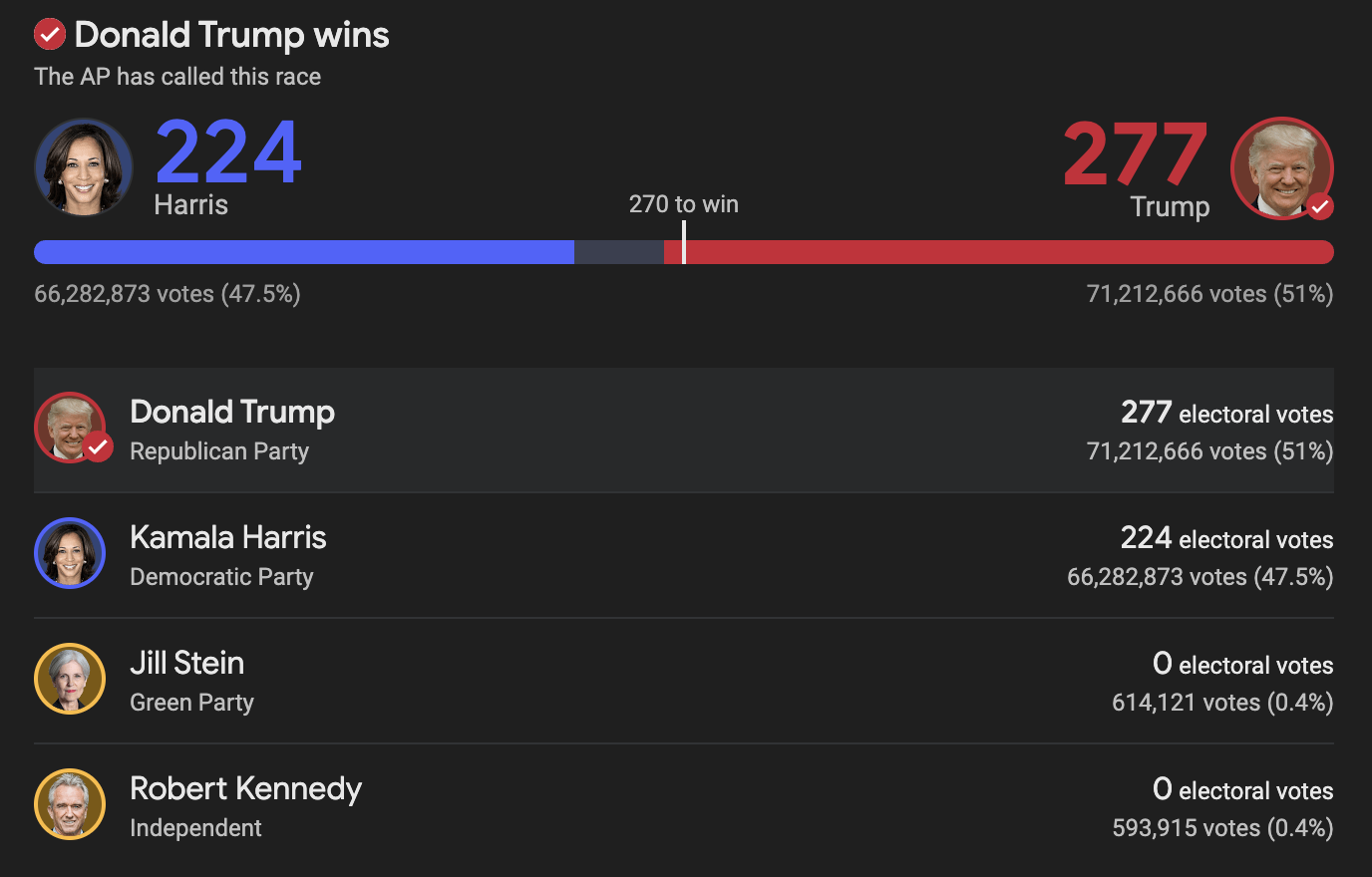
Donald Trump has been elected the 47th president of the United States. Trump, a polarizing figure, secured 277 electoral votes and 71 million popular votes to secure this win. Trump’s election is unprecedented; he is a convicted felon, inspired his supporters to storm the Capitol when he lost in 2020 and survived two assassination attempts. The state of Wisconsin delivered the finishing blow, taking his opponent, Vice President Kamala Harris, out of contention.

Trump addressed his supporters from his election night watch party in Florida, calling for unity. “It’s time to put the divisions of the past four years behind us,” Trump said. “It’s time to unite.”

“We have to put our country first for at least a period of time,” he added. “We have to fix it.”

Despite Trump’s history of disparaging remarks, he still secured 53% of the Hispanic vote in Florida, a state he won handily. Trump won the support of 45% of Latino voters, a big jump from the 33% he secured in his loss against President Biden. It is the strongest GOP performance among Latinos since the election of George W. Bush in 2004.

Trump gained much of his momentum from Latino men, who backed him over Harris by 10 points. Over the past few months, the spotlight was on Black men and White women as the demographics that would ultimately take Trump over the top. However, Harris actually closed the gap among White women, and 8 in 10 Black men supported Harris.

As the country prepares itself for another four years of Trump, the economy, illegal immigration, the conflict between Israel and Palestine, along with the Russia-Ukraine conflict are on the short list of issues that should be addressed immediately

Lil’ WeezyCon to Kick Off November 2, Expanding Lil WeezyAna Fest with a New Networking Platform

By Eddy “Precise” Lamarre

On November 2, 2024, Live Nation Urban, in partnership with Culture Creators, will debut Lil’ WeezyCon—a dynamic addition to the annual Lil WeezyAna Fest in New Orleans. The inaugural event will take place at The Fillmore from 9 a.m. to 5 p.m., offering high-level networking opportunities with thought leaders, creatives, artists, and young professionals.

The event encourages participation from college students, high school seniors, and community organizations, providing a platform to connect with industry leaders in sectors they aspire to join. Designed with empowerment in mind, Lil’ WeezyCon will feature professionals in entertainment and entrepreneurship who will share their expertise and insights. Students from Dillard University are taking part in producing the event, with volunteers from LSU, Xavier University, and other local schools helping ensure it has a lasting impact throughout the city.

Tickets for the event are free, and college students with a valid ID will receive VIP access.

“We knew we wanted to do something special with this year’s festival, and tapping the Culture Creators Foundation to help us create Lil’ WeezyCon felt like the perfect way to engage the community and bring college students into the mix,” said Brandon Pankey, Vice President of Live Nation Urban. “This partnership allows us to expand beyond music and create an experience that leaves a lasting impact on young professionals and emerging creators.”

Industry leaders from Amazon, Ebony, and SoundExchange will be among those offering insights to attendees through panel discussions, workshops, and networking sessions. Topics on deck include music industry trends, media representation, and its cultural impact.

Lil’ WeezyCon will conclude with the Lil WeezyAna Fest Thank You Brunch on Sunday, November 3, at 10 a.m. at the House of Blues in New Orleans.

For more information and to register, visit www.lilweezyanafest.com.

Lil Durk Arrested: What It Means for Drill Music and Its Global Impact

Can the Genre Move Past Violence and Find a New Voice?

By: Eddy “Precise” Lamarre

Lil Durk, a cornerstone of Chicago’s drill music scene, was recently arrested in Broward County, Florida, on charges linked to a murder-for-hire scheme. This arrest has sent shockwaves through both the rap community and fans worldwide, not only because of the gravity of the accusations but also because it highlights the delicate balance between art and street life—a balance that drill music has both celebrated and blurred for over a decade.

The Origins of Drill: From Chicago’s Streets to a Global Movement
Drill music emerged in Chicago’s South Side in the early 2010s, reflecting the harsh realities of life in under-resourced neighborhoods. With its grim beats, haunting melodies, and brutally honest lyrics about gang violence and survival, drill quickly became the voice of a generation grappling with poverty, systemic neglect, and crime. Chief Keef, widely regarded as one of the pioneers of the genre, catapulted drill into the mainstream with “Don’t Like”, recorded while under house arrest. The accompanying video, shot in his grandmother’s living room, embodied the rawness of the movement: unpolished, urgent, and unfiltered.

Drill music became an audio diary of real-life conflicts. Lil JoJo’s murder in 2012, just hours after he posted a video taunting rivals, underscored the genre’s connection to actual street violence. As artists like King Louie, G Herbo, and Lil Durk rose to fame, they carried with them the weight of these street rivalries. The music was not just entertainment—it was a survival mechanism, both documenting and driving conflicts, often amplifying tensions between factions like O Block and Tookaville.

Drill’s Global Reach: From London to New York
What began in Chicago soon found new life across the Atlantic. In London, artists like Skepta and Headie One embraced drill’s style, giving birth to UK drill, a subgenre that fused Chicago’s original sound with the distinctive grime beats of British hip-hop. The UK’s adaptation added a new lyrical flair and further spread the genre’s influence into European rap scenes.

In New York, drill took on a new identity thanks to artists like Pop Smoke, whose infectious hits like “Dior” and “Welcome to the Party” fused traditional drill beats with melodic hooks. New York drill evolved into a hybrid of Chicago’s original intensity and more commercial-friendly sounds, helping drill achieve mainstream global success. These adaptations have made drill a dominant force not only in the United States but also across the Caribbean, Australia, and Africa, becoming a powerful cultural export from Chicago’s streets.

However, while drill’s growth has elevated many artists, it has also carried the genre’s reputation for inciting violence. Diss tracks, which call out rivals directly or refer to fallen enemies, have become both a hallmark of the music and a trigger for real-world retaliation. This violent connection, unfortunately, remains drill’s Achilles’ heel.

Lil Durk: A Career Marked by Triumph and Tragedy
Few artists embody the duality of drill music like Lil Durk. Over the past decade, Durk has become not only one of Chicago’s most successful exports but also one of its most controversial. He’s achieved Grammy recognition and released multiple platinum albums, but his career has been marred by the loss of friends and family members—many of whom have fallen victim to the violence that the music both reflects and perpetuates.

In 2021, Durk’s brother, DThang, was fatally shot outside a nightclub near Chicago, adding to a long list of personal losses. One of Durk’s closest collaborators, King Von, was also killed in 2020 in Atlanta during an altercation with associates of Quando Rondo. These losses deepened Durk’s connection to the very conflicts that drill music has documented.

Most recently, Durk was named in a civil lawsuit filed by FBG Duck’s family, accusing him and his OTF label of placing a $100,000 bounty on Duck’s life, leading to his murder in the Gold Coast district of Chicago in 2020. Federal authorities claim that the murder-for-hire plot was part of an escalating war between factions tied to O Block and Tookaville. The lawsuit argues that record labels profited from the violence, capitalizing on the fame generated by street conflicts that were amplified through diss tracks.

The Arrest: A Turning Point for Durk and Drill?
Durk’s arrest in October 2024 comes at a time when the hip-hop industry is facing increased scrutiny over artists’ involvement in criminal activities. Young Thug is currently on trial under RICO charges, and rap mogul Sean “Diddy” Combs is also under investigation. These high-profile legal battles reflect a growing effort by law enforcement to crack down on the blurred lines between music and street activity.

Just days before his arrest, Durk seemed to be turning a corner, hosting an international day of prayer in Chicago and receiving keys to the cities of Broadview and Bellwood. Many saw these gestures as a sign of redemption—a potential shift away from the violence that has defined much of his career. However, his recent arrest threatens to undo that progress and raises questions about whether drill artists can ever truly escape their past.

What’s Next for Drill Music?
Lil Durk’s arrest could mark a pivotal moment for drill music. With rising concerns over violence, the genre is at a crossroads. Some believe that the arrest of key figures like Durk could signal the beginning of the end for drill as we know it, as law enforcement continues to scrutinize artists with street affiliations. Others argue that the genre will evolve, shedding its violent roots while maintaining its gritty authenticity.

For many fans, drill represents more than just music—it’s a lifeline and a form of storytelling that captures the struggle of young Black men navigating systemic inequality. Artists like Durk, Chief Keef, and G Herbo have used music as a way out, proving that art can be a powerful tool for both self-expression and survival. However, as the genre’s violent reputation persists, the question remains: Can drill music evolve without losing its essence?

“When The Sun Shines Again”: The Visual Masterpiece Behind Common and Pete Rock’s Latest Hit

Hip-hop heavyweights Common and Pete Rock are riding high on the success of their first full-length collaboration, “The Auditorium, Vol. 1.” The duo recently dropped a fresh video for “When The Sun Shines Again,” a standout track from the album released this summer to critical acclaim.

The visually striking clip, helmed by directors Marleaux Desire and ILLIMITEWORD, features guest appearances from neo-soul crooner Bilal and De La Soul’s Posdnuos. It’s the latest in a series of videos showcasing the album’s artistic vision, with Pete Rock’s signature boom-bap production providing the sonic backdrop.

Common and Rock wrapped up their 19-stop “The Auditorium Tour” last Friday with a bang, packing New York City’s Webster Hall. The tour’s finale capped off a whirlwind week in the Big Apple, which included a sold-out three-night, six-show residency at the iconic Blue Note Jazz Club.

The pair’s creative synergy hasn’t gone unnoticed by the industry. They recently snagged four BET Hip Hop Awards nominations, including nods for “Best Duo Group” and “Impact Track” for their socially conscious joint “Fortunate.” Common’s razor-sharp wordplay earned him a “Lyricist of the Year” nomination, while Pete Rock’s masterful beats landed him in the running for “Producer of the Year.”

“The Auditorium, Vol. 1,” out now on Loma Vista Recordings, marks a high point in both artists’ storied careers. Common’s introspective rhymes and Pete Rock’s soul-drenched production create a perfect storm of old-school authenticity and contemporary relevance.

Two of the genre’s most respected veterans serves as a potent reminder of rap’s enduring power. With “The Auditorium, Vol. 1,” Common and Pete Rock aren’t just nodding to hip-hop’s past – they’re carving out its future.

Standing Strong: Defending Haitian Heritage Against Misinformation and Upholding Our Legacy

Precise by Jean Baptiste DuSable mural in Hyde Park - (Photo courtesy of Eddy "Precise" Lamarre
Precise by Jean Baptiste DuSable mural in Hyde Park – (Photo courtesy of Eddy “Precise” Lamarre

As a child of Haitian immigrants and a first-generation American, the disrespect of the last few days is unfortunately all too familiar. It reflects the deep-seated disdain that a world, shaped by white supremacy, holds for Haitian people and our resilience.

Growing up on the South Side of Chicago as a Haitian-American in the 1980s was challenging. I often felt out of place. Haitians were not well-known, even among Black communities. On top of that, harmful lies were circulating, blaming Haitians for the spread of AIDS, which only added to the difficulties.

Despite these challenges, I am deeply proud of my heritage. Being Haitian-American gives me a unique perspective on the world, shaped by my experiences. When I move through life, I am seen as a Black man, and I proudly own that identity. I am also a proud Haitian man, and knowing that Chicago, a city I love, was founded by a Haitian man fills me with pride. The rich history of this city runs deep.

I hadn’t planned to comment on the recent falsehoods spreading like wildfire across the internet. I know they are baseless, so responding seemed unnecessary. However, I now realize this is bigger than me. It’s crucial to make it clear that such lies against my people will not go unchallenged. At the very least, we will raise our voices in opposition.

As a 50-year-old caring for a Haitian parent with dementia, who cannot return to her homeland due to the destabilization caused directly by American interference and interests, I feel a responsibility to speak the truth and protect our dignity as a people.

To my fellow Black community members: if you are moving freely without concern in this moment, I urge you to thank God and the Haitian people. Haitians set the blueprint for liberation and remain steadfast, even in the face of slander and misinformation.

To my fellow Haitian-Americans: we must seize this moment to disrupt the mindset that seeks to keep us enslaved, both mentally and socially. Exercise your power through action, engage with your community, share our history and culture, and, most importantly, vote.

L’Union Fait La Force.

— Eddy “Precise” Lamarre

The Sounds of “Water & Garri”: Tiwa Savage’s Journey from Music Icon to Film Producer

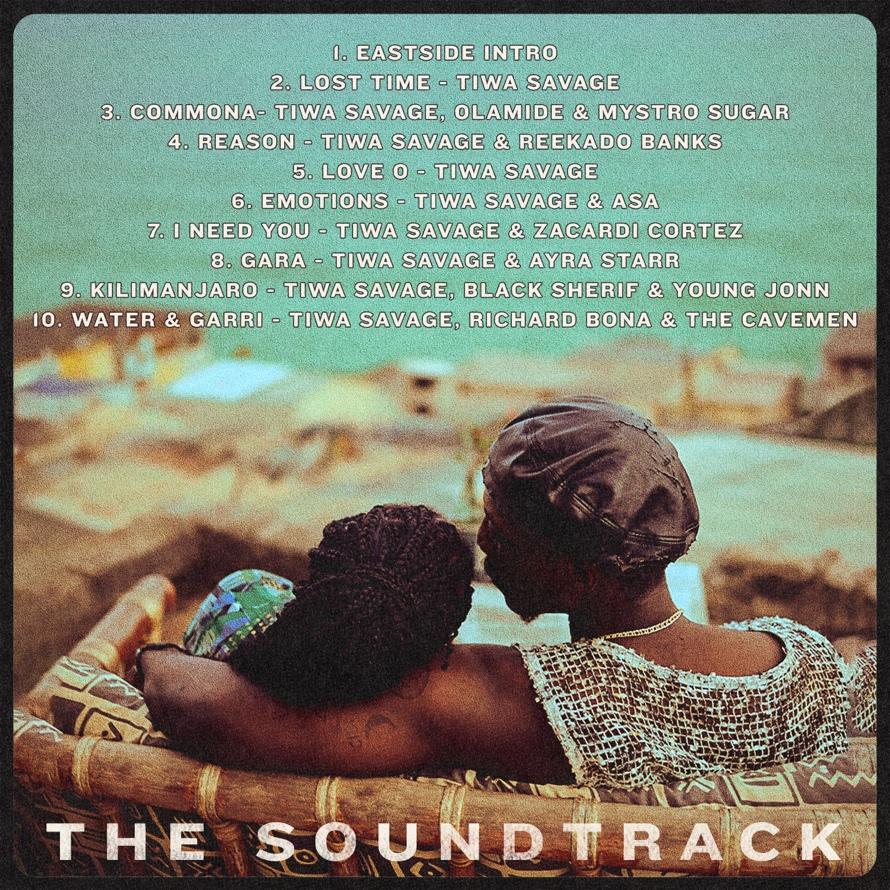
Tiwa Savage, the anointed queen of Afrobeats, unveils her latest artistic venture with the release of “Water & Garri,” a feature film accompanied by a soundtrack that she personally curated. Premiering on Amazon Prime Video, the film’s release is perfectly synchronized with the soundtrack, available through EMPIRE, highlighting Savage’s meticulous approach to her craft.

“Water & Garri” transcends the traditional boundaries of film and music, offering a lush, auditory experience comprised of ten original tracks. Tiwa Savage collaborates with a dynamic roster of artists across genres, including Grammy-nominated Olamide and Ayra Starr, respected Nigerian singer-songwriter ASA, Cameroonian multi-instrumentalist Richard Bona, gospel sensation Zacardi Cortez, and emerging talents such as Black Sherif, Young Jonn, MystroSugar, and The Cavemen.

The soundtrack is a rich tapestry of Afrobeat, Afropop, amapiano, R&B, gospel, and even elements of mainstream trap and pop. Variety magazine praises the soundtrack for its “heavy use of live instrumentation and ambient sound effects,” which enhance the immersive experience, while Savage’s signature overtone-singing adds a unique texture.

Tiwa Savage expressed her enthusiasm for the project, noting the creative freedom it afforded her. “People expect a certain sound from me, but in doing a soundtrack, I could experiment,” Savage says. She emphasizes her commitment to infusing African culture into her work, whether through fashion or music, celebrating the beauty of her heritage.

The film “Water & Garri” is a significant milestone in Savage’s career, marking her debut as both lead actress and Executive Producer. Set in the vibrant yet tumultuous environment of Cape Coast, Ghana, the film follows Aisha, an ambitious fashion designer who returns to her native Eastside after a decade in the United States. Confronted with escalated violence and unresolved tensions, Aisha navigates reconnecting with her past while confronting personal guilt.

Directed by Meji Alabi, the film features compelling performances by Mike Afolarin, Andrew Bunting, and Jemima Osunde, woven together with captivating cinematography that brings the story of “Water & Garri” to life.

Reflecting on her illustrious career, Tiwa Savage celebrated the 10th anniversary of her debut album “Once Upon A Time” in July 2023. Her journey since then has been marked by significant achievements including collaborations with global icons like Beyoncé, Chris Martin, and Nas, and a historic win at the MTV European Music Awards as the first female Best African Act. Her tours in North America and Europe were highly successful, and in 2023, she performed at the Coronation Concert for King Charles II, representing The Commonwealth. Looking ahead, Savage is set to headline a major concert at London’s Wembley Arena in 2025, continuing to elevate her status as a global music phenomenon.

Listen here