What Malcolm Jamal-Warner means to Black boys and men

Hearing the news of Malcolm-Jamal Warner’s passing hit like a ton of bricks. It was totally out of left field—so unexpected and sudden. As a man of a certain age, I recognize that many of my peers are experiencing major life changes. More often than not, those changes involve the loss of a loved one or their own passing. We all know that at some point, we have to go. But whenever one of us does, it always feels too soon.

Malcolm-Jamal Warner’s death hits especially hard because of what he represented to young Black men around the world. We were introduced to him as Theo Huxtable—a clean-cut Black teen who came from a good home and lived a normal life. In the eighties, there were very few, if any, characters who resonated with Black boys in that way. He wasn’t painted by the brush of white society, and he wasn’t some sidekick. Theo was us. He got the pretty girls, had a cool best friend, and sometimes struggled in school. The mere existence of a character like Theo was revolutionary—and Malcolm embodied him in a way that was honorable and aspirational.

Malcolm carried that same dignity throughout his entire career. He consistently showed up on screen as a strong character—not a caricature. His impact was real and will endure for generations.

When one of us passes on, it always feels too sudden. But in my heart, I believe that when that moment comes, it’s God letting us know our assignment is complete—and He’s coming to take us home. I know I speak for millions of brothers when I say: thank you, Malcolm. Job well done.

  • Eddy “Precise” Lamarre

Haiti’s Revolutionary Soup: How a Once-Forbidden Dish, Soup Joumou Became a Symbol of Independence

By Eddy “Precise” Lamarre

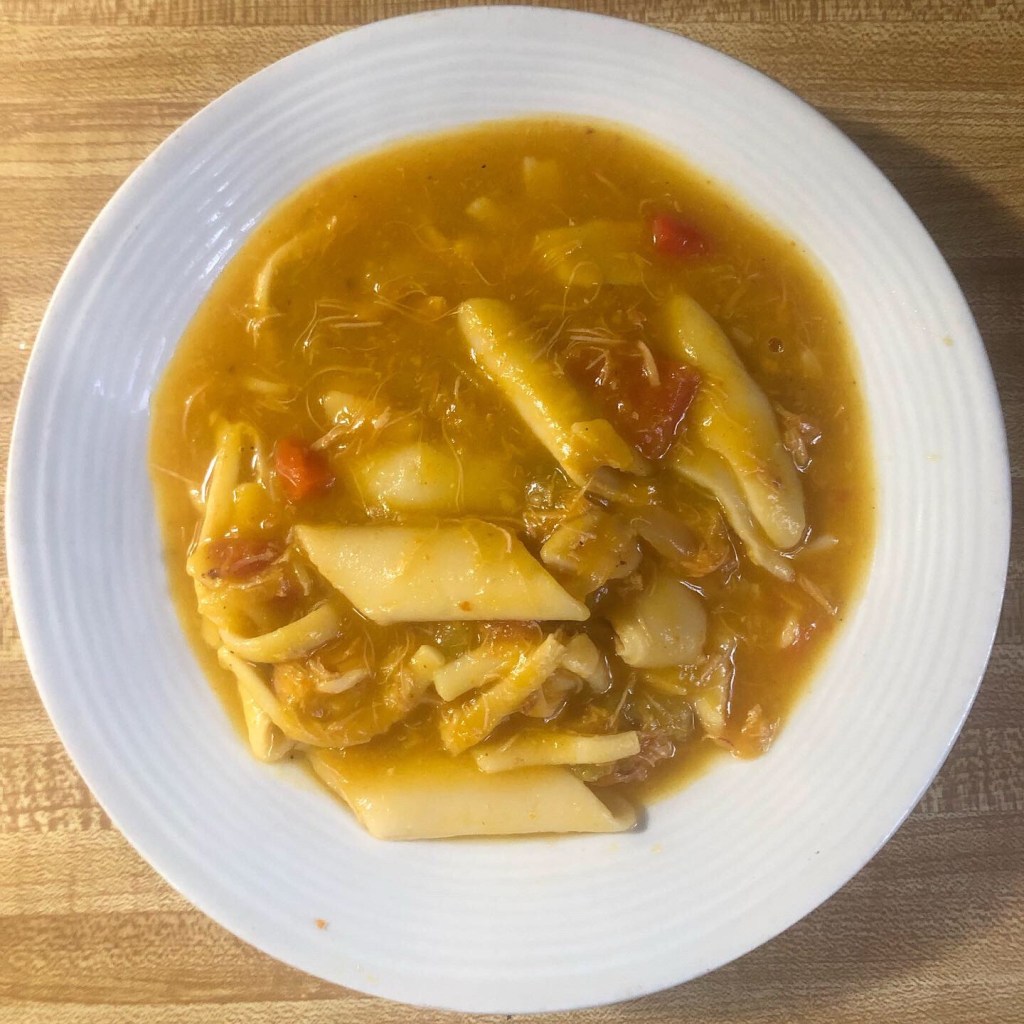
Soup Joumou prepared by Eddy “Precise” Lamarre

Each January 1, as dawn breaks over Haiti, the aroma of simmering pumpkin soup wafts through neighborhoods, telling a story of resistance and triumph. Soup Joumou, once forbidden to enslaved people under French colonial rule, now serves as the centerpiece of Haiti’s Independence Day celebrations, marking 221 years since the nation became the world’s first Black republic.

This soup represents everything we fought for. Every spoonful carries the taste of freedom.

The golden-hued soup, rich with beef, vegetables, and Caribbean pumpkin, was once exclusively reserved for French plantation owners. After defeating Napoleon Bonaparte’s forces in 1804, Haitians claimed the dish as their own, transforming it from a symbol of oppression into one of liberation.

Today, the ritual of preparing and sharing Soup Joumou bridges generations. Families gather before sunrise to carefully craft the soup, following time-honored recipes passed down through centuries. The communal nature of the dish embodies Haiti’s national motto, “L’Union Fait La Force” — Unity Makes Us Stronger.

As Haiti navigates modern challenges, this New Year’s tradition remains unwavering, serving as both celebration and remembrance. Each bowl of Soup Joumou tells a story of resilience, carrying forward the legacy of a revolution that changed the world

Lil’ WeezyCon to Kick Off November 2, Expanding Lil WeezyAna Fest with a New Networking Platform

By Eddy “Precise” Lamarre

On November 2, 2024, Live Nation Urban, in partnership with Culture Creators, will debut Lil’ WeezyCon—a dynamic addition to the annual Lil WeezyAna Fest in New Orleans. The inaugural event will take place at The Fillmore from 9 a.m. to 5 p.m., offering high-level networking opportunities with thought leaders, creatives, artists, and young professionals.

The event encourages participation from college students, high school seniors, and community organizations, providing a platform to connect with industry leaders in sectors they aspire to join. Designed with empowerment in mind, Lil’ WeezyCon will feature professionals in entertainment and entrepreneurship who will share their expertise and insights. Students from Dillard University are taking part in producing the event, with volunteers from LSU, Xavier University, and other local schools helping ensure it has a lasting impact throughout the city.

Tickets for the event are free, and college students with a valid ID will receive VIP access.

“We knew we wanted to do something special with this year’s festival, and tapping the Culture Creators Foundation to help us create Lil’ WeezyCon felt like the perfect way to engage the community and bring college students into the mix,” said Brandon Pankey, Vice President of Live Nation Urban. “This partnership allows us to expand beyond music and create an experience that leaves a lasting impact on young professionals and emerging creators.”

Industry leaders from Amazon, Ebony, and SoundExchange will be among those offering insights to attendees through panel discussions, workshops, and networking sessions. Topics on deck include music industry trends, media representation, and its cultural impact.

Lil’ WeezyCon will conclude with the Lil WeezyAna Fest Thank You Brunch on Sunday, November 3, at 10 a.m. at the House of Blues in New Orleans.

For more information and to register, visit www.lilweezyanafest.com.

Standing Strong: Defending Haitian Heritage Against Misinformation and Upholding Our Legacy

Precise by Jean Baptiste DuSable mural in Hyde Park - (Photo courtesy of Eddy "Precise" Lamarre
Precise by Jean Baptiste DuSable mural in Hyde Park – (Photo courtesy of Eddy “Precise” Lamarre

As a child of Haitian immigrants and a first-generation American, the disrespect of the last few days is unfortunately all too familiar. It reflects the deep-seated disdain that a world, shaped by white supremacy, holds for Haitian people and our resilience.

Growing up on the South Side of Chicago as a Haitian-American in the 1980s was challenging. I often felt out of place. Haitians were not well-known, even among Black communities. On top of that, harmful lies were circulating, blaming Haitians for the spread of AIDS, which only added to the difficulties.

Despite these challenges, I am deeply proud of my heritage. Being Haitian-American gives me a unique perspective on the world, shaped by my experiences. When I move through life, I am seen as a Black man, and I proudly own that identity. I am also a proud Haitian man, and knowing that Chicago, a city I love, was founded by a Haitian man fills me with pride. The rich history of this city runs deep.

I hadn’t planned to comment on the recent falsehoods spreading like wildfire across the internet. I know they are baseless, so responding seemed unnecessary. However, I now realize this is bigger than me. It’s crucial to make it clear that such lies against my people will not go unchallenged. At the very least, we will raise our voices in opposition.

As a 50-year-old caring for a Haitian parent with dementia, who cannot return to her homeland due to the destabilization caused directly by American interference and interests, I feel a responsibility to speak the truth and protect our dignity as a people.

To my fellow Black community members: if you are moving freely without concern in this moment, I urge you to thank God and the Haitian people. Haitians set the blueprint for liberation and remain steadfast, even in the face of slander and misinformation.

To my fellow Haitian-Americans: we must seize this moment to disrupt the mindset that seeks to keep us enslaved, both mentally and socially. Exercise your power through action, engage with your community, share our history and culture, and, most importantly, vote.

L’Union Fait La Force.

— Eddy “Precise” Lamarre

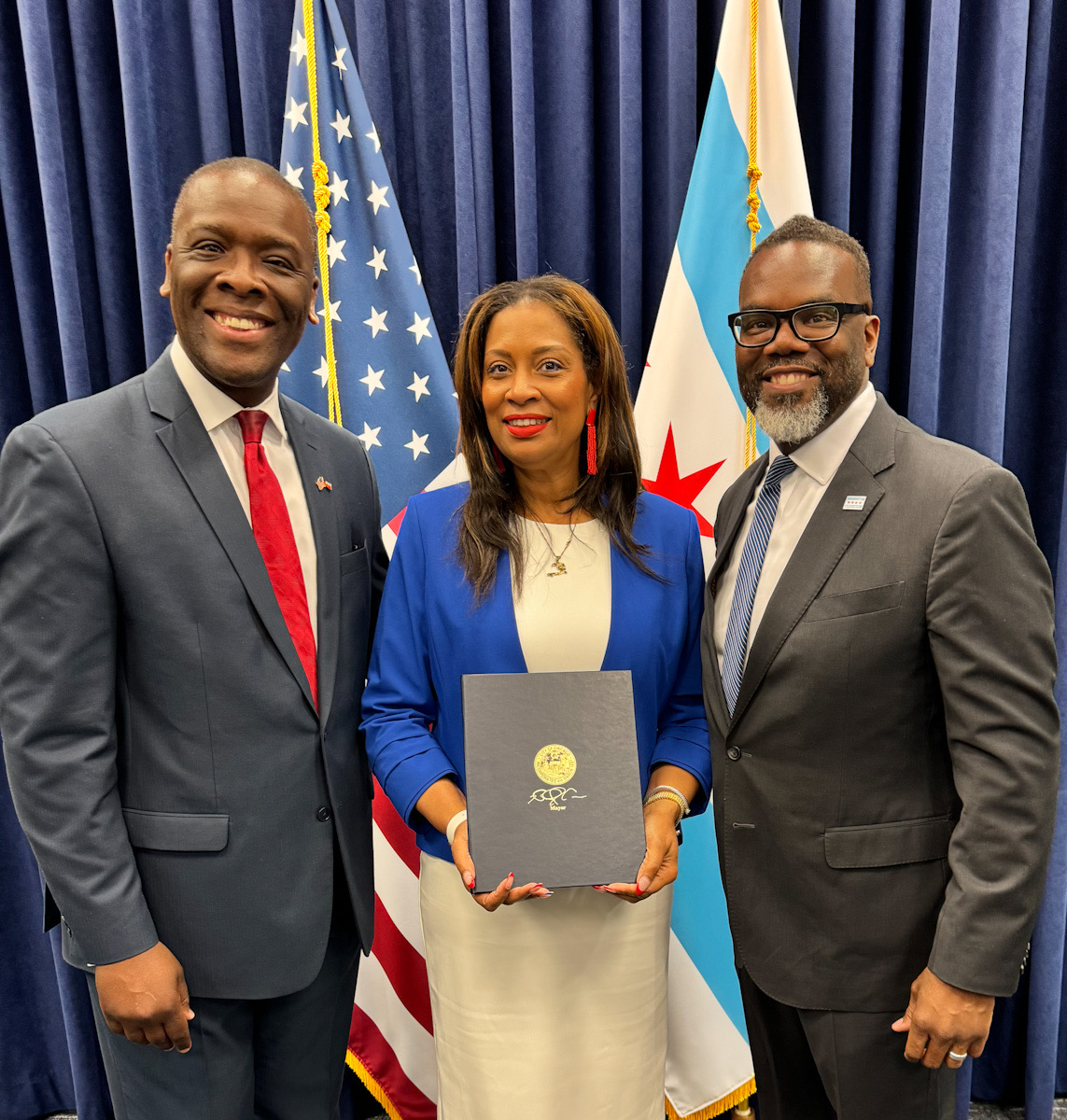
Mayor Brandon Johnson officially designates May as Haitian Heritage Month in Chicago, celebrating the city’s rich cultural history

In a significant stride towards recognizing the contributions of Haitian Americans, the City of Chicago has officially designated May as Haitian Heritage Month. This resolution honors the city’s founding by Jean Baptiste Point DuSable, a Haitian man, and his indigenous wife Kitihawa in 1780. Chicago, which was incorporated in 1837, now pays homage to its roots and the vibrant Haitian community within its bounds.

Mayor Brandon Johnson, in a celebratory address, remarked, “In our modern history, the city of Chicago has taken strides honoring the legacy of the incredible Jean Baptiste Point DuSable. Today, we continue to remember and uplift the contributions of Haitian Americans in our city through this resolution. This community enriches our neighborhoods, schools, local government, business, and by celebrating the culture and traditions, this is what makes Chicago stronger. It’s what makes Chicago a very vibrant place. I’m truly honored to celebrate alongside you all today and as mayor, I will always celebrate the diversity of our city.”

This new resolution is more than just a symbolic gesture; it is a testament to the enduring impact of Haitian Americans on the city’s fabric. Rolling Out reached out to Cyndee Montes Newman, Executive Director and Founding Member of Daughters of Haiti, for her insights on the importance of this recognition. Newman passionately responded, “Chicago was founded by a Haitian man. It is only natural that this city, which he built, should honor and recognize his descendants! We have done a lot of work in the city to showcase the great work of Haitian Americans today. This resolution shows the Haitian Americans living in Chicago that we are seen, that our work is recognized, and that our culture is valued. The resolution is a positive step in advancing the profile of our community in many areas and is key to continued growth as a vibrant and culturally diverse, world-class city.”

Patrick Brutus, Cyndee Montes Newman and Mayor Brandon Johnson presenting the resolution that recognizes May as Haitian Heritage Month in Chicago (Photo credit: Daughters Of Haiti)

Newman’s words highlight the significance of this recognition, especially in a time when Haiti faces political turmoil and widespread suffering. While the resolution celebrates cultural heritage, it also serves as an emblem of solidarity, with aspirations that these moments of recognition will translate into tangible support for Haitians, both locally and abroad.

The acknowledgment of Haitian Heritage Month in Chicago not only celebrates the historical significance of DuSable’s contributions but also shines a light on the current achievements and challenges of Haitian Americans. This resolution fosters a deeper appreciation of cultural diversity and strengthens the city’s commitment to inclusivity. As Chicago moves forward, the celebration of Haitian Heritage Month will undoubtedly enhance the city’s rich cultural tapestry, reaffirming the values of unity and community spirit.

Happy Birthday to me! – I’m at that age where….

Just had another birthday recently and I am so grateful. I thank God for this life, my family and my experiences and I pray I am blessed to see many more. 

As I get older I realize my tolerance changes for many things and there are a few things that are more important than others. 

Check out my list below.

I’m at that age where….

1. My relationship with God, my family, friends and my peace of mind are of the utmost importance.

2. Leaving my house to spend money and stand in line just to enter a packed room where I can’t move around is NOT my idea of fun

3. Creating memories means more to me than impressing anyone.

4. Yeah, you fine AF, but can we actually talk about something besides what’s trending on social media?

5. I don’t take anything personally. I know what people think about me is their business.

6. Everybody does not need to know my business.

7. The songs I grew up with randomly come on in the grocery store while I’m shopping.

Thank you so much for taking a moment out of your day to acknowledge mine. I am so grateful for you and I wish all the great things you wish for me to be extended to you.

God is Awesome!

– Eddy Lamarre

Why Haitian Independence should be important to Black people around the world

January 1, 1804

January 1, 1804

On this day we celebrate defeating Napoleon’s army, affirming our freedom and establishing the first free Black nation on in the western hemisphere.

L’Union Fait La Force

Soup Joumou is a reminder of Haitian resilience and independence

As the world rings in the new year with fireworks and celebrations, Haitians have a unique reason to rejoice on January 1st. It’s a day that marks their hard-fought independence from the oppressive grasp of French colonial rule. On January 1, 1804, Haiti proudly declared its sovereignty after a relentless struggle against Napoleon’s formidable army. This monumental achievement was spearheaded by enslaved Haitians, initially under the leadership of Toussaint Louverture and later by Jean-Jacques Dessalines, who managed to expel the French from the island, establishing Haiti as the very first free Black nation in the northern hemisphere. This remarkable feat makes Haiti the only country to liberate itself from the brutal shackles of slavery.

In commemoration of this historic event, Haitians across the globe come together to celebrate with a special dish known as “soup joumou.” Interestingly, during the dark days of slavery, this soup was a privilege reserved exclusively for plantation owners and slave masters. However, the resilient Haitian people reclaimed this dish as a symbol of their triumphant struggle against the abhorrent institution of chattel slavery. Since then, this tradition has endured, serving as a powerful reminder of their indomitable spirit and resilience.

Soup joumou is more than just a culinary delight; it is a profound representation of freedom, strength, and love. Each spoonful of this hearty soup embodies the taste of liberation, reminding Haitians of their ancestors’ courage and determination in the face of adversity. It symbolizes the hope that flourished even in the darkest of times and the enduring love for their homeland.

The significance of Haiti’s independence day goes beyond mere historical importance; it stands as a beacon of inspiration for oppressed peoples worldwide. It is a testament to the human spirit’s capacity to overcome seemingly insurmountable challenges and to achieve freedom and dignity. Haitians take immense pride in their heritage and use this day to reflect on their rich history and the sacrifices made by their forebears.

In conclusion, while the rest of the world joyously welcomes the new year, Haitians celebrate a remarkable and resilient history. The declaration of independence on January 1, 1804, marked the birth of a nation and the triumph of a people over the horrors of slavery. Soup joumou, a simple dish, serves as a potent symbol of this extraordinary journey, embodying the values of freedom, strength, and love that define the Haitian spirit.

Ye’s trailer for Jeen-Yuhs has been released

Ye’s trailer for his documentary Jeen-Yuhs

Ye, formerly known as Kanye has released the trailer for his documentary “Jeen-Yuhs”.

The theatrical release of the film will be on February 10, 2022 ahead of it’s Netflix premiere on February 16, 2022.

Ye has elevated himself to billionaire genius status and it will be interesting to witness some of the journey that got him there.

What do you think about this? Are you excited?

We drink soup for Haitian Independence

Today we celebrate Haitian Independence. On January 1, 1804 enslaved Haitians rose up and liberated themselves from French colonial rule.

This bowl of soup is known as Soup Joumou. It is a squash based soup that was eaten exclusively by the slave owners and the elite. The Haitian people claimed this dish as their own once they freed themselves from slavery.

2021 was a tumultuous year for the Haitian people. It is often said that many of the issues that are at the forefront of Haiti’s existence have to do with the fact that Haiti was the first Black-led republic in the Western Hemisphere.

Today I drink this soup proud to know that my ancestors had the audacity to take action and free themselves from an unjust rule. I drink this soup knowing that God will not continue to allow Haiti to suffer. I drink this soup knowing that my ancestors have contributed to the freedom of Black people all over the world.

The diaspora owes a debt to the people of Haiti. Once this debt is paid we will see the world open up for all Black people.

L’Union Fait La Force

Translated

Our Unity Makes Us Strong

-Precise